
Top 7 Reasons Why Threading vs Waxing — Which Is Better for Sensitive Skin?

Table of Contents
Introduction
If you’ve ever wondered about Threading vs Waxing — Which Is Better for Sensitive Skin,
you’re not alone. People with easily irritated skin often struggle to find a hair-removal method
that keeps them smooth without causing redness, bumps, or burning sensations.
This guide breaks down both methods so you can make the best choice for your skin type.
What’s the Difference Between Threading and Waxing?
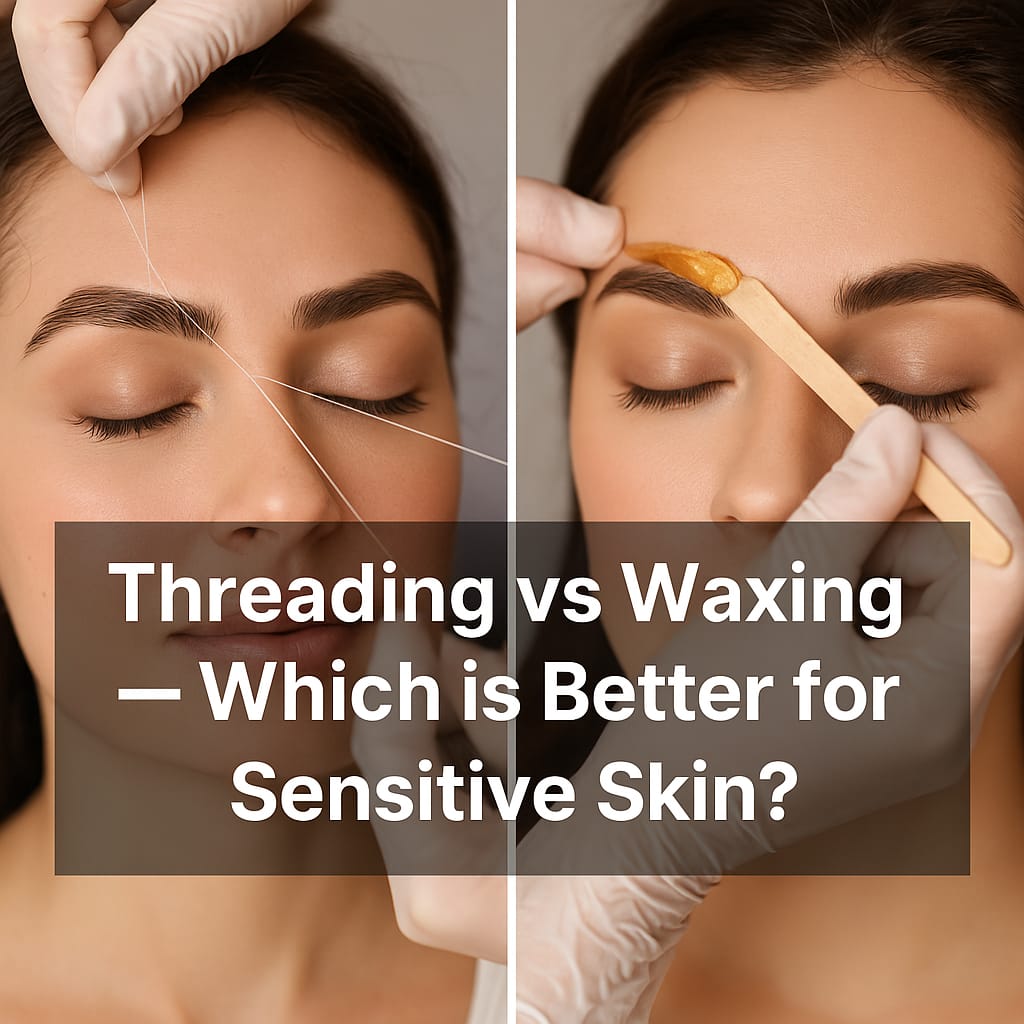
Threading uses a twisted cotton thread to remove hair at the follicle level, making it ideal for
precise areas like eyebrows. Waxing involves spreading warm or cold wax on the skin and pulling it
off to remove multiple hairs at once.
Both methods can give long-lasting results, but they behave differently on sensitive skin.
How Each Method Affects Sensitive Skin
Sensitive skin reacts easily to friction, heat, pressure, and ingredients found in skincare
products. That’s why choosing the right hair-removal method is essential.
Threading tends to cause less chemical irritation since no wax or synthetic product touches the
skin. Waxing, on the other hand, can pull at the outer skin layer, increasing the chances of
redness and sensitivity.
Benefits of Threading for Sensitive Skin
Many people with delicate skin prefer threading because it:
- Does not require heat, reducing risk of burns.
- Does not use chemicals, fragrances, or resins.
- Gives strong eyebrow precision.
- Causes minimal contact with skin.
However, threading may cause short-term redness due to friction but typically fades quickly.
Benefits of Waxing for Sensitive Skin
Waxing can still work for sensitive skin when done correctly. Gentle formulas such as hard wax
are less irritating because they stick to the hair instead of the skin.
- Removes large areas of hair quickly.
- Results last 3–6 weeks.
- Can be less painful when performed by an experienced esthetician.
But waxing may trigger reactions in people who have sensitivities to heat or ingredients like
fragrance and rosin.
Threading vs Waxing — Which Is Better for Sensitive Skin?
When comparing Threading vs Waxing — Which Is Better for Sensitive Skin, threading generally
wins for extremely reactive skin. It’s gentler, more precise, and does not require chemicals.
However, waxing can still be safe if performed with high-quality, hypoallergenic waxes.
Your individual sensitivity level should guide your choice:
- Choose threading for facial hair, especially eyebrows or upper lip.
- Choose gentle waxing for legs, arms, or larger body areas if your skin can tolerate it.
Aftercare Tips for Sensitive Skin
No matter which method you choose, proper aftercare is key:
- Apply aloe vera gel to soothe inflammation.
- Avoid direct sunlight for 24 hours.
- Skip makeup or heavy skincare immediately after treatment.
- Use fragrance-free moisturizers.
Here’s a helpful dermatology guide on sensitive skin care:
American Academy of Dermatology — Sensitive Skin Tips
For more hair removal advice, check out our Hair Removal Tips Guide.
Final Verdict
So, in the debate of Threading vs Waxing — Which Is Better for Sensitive Skin, the best choice comes
down to your personal tolerance. Threading is typically gentler for facial areas, while
hypoallergenic waxing can work well for larger zones. When in doubt, start with threading and see
how your skin responds.

Both methods can be great as long as the right technique and products are used. Listen to your
skin, test small areas first, and always follow aftercare.
If you’re still unsure which method your skin may respond better to, consider doing a small patch test before committing to a full session. This simple step helps you observe how your skin reacts to either threading or waxing, especially if you are prone to redness, tingling, or delayed irritation. Many professionals recommend trying the test at least 24 hours before your appointment. This way, you can confidently choose the safest option for your sensitive skin.